Monthly Progress Report (MPR) (June 2025)
|
Title of the Project |
Project for Empowering the Small Holder Farmer’s Action (PESHA) |
|
Name of Implementing Organization |
Maya-Prem Memorial Trust (MPMT) |
|
Project Location/ Areas covered by project |
Gandaki Rural Municipality and Sahid Lakhan Rural Municipality, Gorkha |
|
Funded By |
Japan International Cooperation Agency (JICA) |
|
Time period covered in Report |
June 2025 |
|
Report Prepared by |
Nitesh Ghimire |
|
Report Submitted by |
Nitesh Ghimire, Field Manager, Maya Prem Memorial Trust (MPMT) |
|
Date of Submission of Report |
7th June 2025 |
|
PA Code: |
J-P1.2 |
|
Activity Name |
Form/ reform Agriculture Groups and select “Experienced Leader Farmers (ELF)” from 40 different groups (expected), who are expected to play key roles linking the project and other farmers |
Presently, the existing number of ELFs associated with PESHA Project is 52. The ELFs have shown an energetic engagement and have taken active role in leading the farmers group. With the purpose to enhance the active participation of farmers to gain the project outcomes. We have planned to add additional farmers as an ELFs as the project have added additional cluster and additional farmers.
For this we have revised the ELFs selection guidelines to address new clusters and farmers.
The highlight of ELFs selection guidelines:
Selection Criteria for ELFs
- Legal & Ethical Standing: Must not have criminal, corruption, or moral misconduct charges.
- Residency: Permanent resident of Gandaki or Shahid Lakhan Rural Municipality and living in the village continuously.
- Age: Between 20 and 66 years.
- Experience:
- At least 9 months of active involvement in coffee or vegetable-related activities under the project.
- Should not be someone who only received seeds/seedlings from the project without independent cultivation.
- Landholding Requirement:
- At least 0.5 ropani in coffee or 1 ropani in vegetables.
- Land must meet the project’s defined criteria and be actively cultivated.
Selection Process
- Preliminary list prepared by project staff based on criteria.
- List discussed and endorsed during farmers’ group meetings.
- Decisions recorded in group meeting minutes.
Group Size-Based Selection
- <5 members: No ELF selected.
- 5–7 members: 1 ELF
- 8–14 members: 2 ELFs
- 15+ members: 3 ELFs
- Only 1 ELF per tole is allowed.
Evaluation & Final Selection
- Project team verifies fields and suitability.
- Only those scoring 705 points or above are selected.
- Selected ELFs receive orientation and formal assignment with defined roles.
Roles & Responsibilities of ELFs
- Demonstrate project-recommended practices on their farms.
- Coordinate with local government and stakeholders.
- Serve as a volunteer leader and resource person.
- Act as a trainer and facilitator in meetings, training, and field demos.
- Provide guidance and technical support to fellow farmers.
- Monitor and report on local project activities.
- Participate in review and feedback sessions.
Project Support to ELFs
- Regular monitoring and mentoring by project team.
- Ongoing capacity building and training sessions.
- Package materials support in cost sharing model.
- Periodic performance evaluations.
|
PA Code: |
J-P1.3.1 |
|
Activity Name |
Conduct OJT program in collaboration with agriculture schools in surrounding area |
In the second year of implementation, the project has expanded its working area by engaging additional coffee farmers and forming new clusters in both rural municipalities. To manage the increased workload and maintain the quality of interventions, the role of the OJT intern has been continued in the Manakamana sites. Mr. Bikram Koirala, serving as the OJT intern, has been responsible for supporting activities across seven clusters in Sahid Lakhan Rural Municipality ward no 2, 3 covering approximately 63 beneficiaries (with updates on new beneficiaries currently in progress).
Mr. Koirala’s placement has contributed significantly to farmer mobilization, successful transplantation of coffee saplings, collection of shade tree sapling demand, regular field monitoring, and timely reporting, thereby ensuring the effectiveness of project activities at the field level.
In addition, for the position of Admin and Accounting Officer, the selection committee has appointed Mr. Rakesh Gautam from among the pool of applicants. Mr. Gautam is scheduled to formally join the organization on 6th July and will assume his duties and responsibilities as the Admin and Accounting Officer from that date.
|
PA Code: |
J-P 1.5 |
|
Activity Name |
Conduct a series of training to ELF for operating and managing the Agriculture Groups (Leadership development, technical skill) - (orentation and training) |
The involvement of Experienced Leader Farmers (ELFs) has been instrumental in the successful implementation of the PESHA Project, given their strong influence within the farming communities. In the first year of the project, ELFs were oriented on their key roles and responsibilities, enabling them to serve as effective liaisons between the project team and the farmers. To broaden their perspective and motivate adoption of improved practices, an exposure visit was organized. This visit provided ELFs with firsthand insights into the broader scope and potential of coffee farming, which significantly shifted their mindset and inspired many farmers to replicate the practices observed.
Building on this momentum, in the second year, a Digital Literacy and Skill Development Workshop was conducted. This initiative aimed to strengthen the capacity of ELFs by enhancing their digital skills and practical knowledge, equipping them to better support farmers and document their work effectively. These continuous capacity-building efforts ensure that ELFs remain empowered to lead agricultural transformation within their communities.
Summary: Digital Literacy and Skill Development Workshop
(Empowering Smallholder Farmers through Digital Agricultural Services)
- Background
With increasing digitalization in agriculture, smallholder farmers in Nepal need digital literacy to access timely agricultural information. To address this, the PESHA Project organized a Digital Literacy and Skill Development Workshop aimed at training Experienced Leader Farmers (ELFs) on using digital platforms like Connect Kisan.
- Workshop Details
- Dates:
- Sahid Lakhan RM: 16th June 2025 (2nd Ashad 2082)
- Gandaki RM: 17th June 2025 (3rd Ashad 2082)
- Participants:
- Sahid Lakhan RM: 33 ELFs (8 Female, 25 Male) + 13 Representatives
- Gandaki RM: 25 ELFs (3 Female, 22 Male) + 3 Representatives
- Facilitators:
- Rajan Dahal (Director, Connect Kisan)
- Samrat Karki (Agri-business expert)
- Key Sessions
- Session 1: Experience Sharing
Farmers from both RMs shared insights from their exposure visits and their evolving roles as ELFs. They emphasized the importance of leadership and knowledge-sharing at the grassroots level. - Session 2: Workshop Introduction
Overview of digital tools and the goal of helping farmers make data-driven decisions using the Connect Kisan platform. - Session 3: Digital Interactive Session
Hands-on training using the Connect Kisan app, covering features like: - Market prices
- Weather updates
- Soil testing
- Pest management
- AI Voice Advisory in Nepali
- Session 4: Annual Calendar for ELFs
Presented structured yearly activities and training to strengthen ELFs’ capacity as local agricultural resource persons.
- Key Findings
- Digital Adoption: Farmers gained confidence in using smartphones; older and less literate farmers appreciated the AI voice system.
- Knowledge Gained: Improved understanding of digital tools for market access, weather, pest control, and safe farming practices.
- Discussion
The training successfully introduced user-friendly, tech-driven solutions to traditionally underserved farmers. Despite literacy and connectivity barriers, participation from diverse groups proved digital tools can be inclusive and impactful.
- Conclusion
The workshop was a milestone in promoting digital inclusion in agriculture. Farmers not only learned practical skills but also gave feedback that will improve platforms like Connect Kisan to better meet their needs.
|
PA Code: |
J-P2.1 |
|
Activity Name |
Select the direct beneficiaries (producers) |
For the second year of implementation, the project has expanded its reach by engaging an additional 320 new farmers and forming 7 new clusters across the two Rural Municipalities. In Gandaki Rural Municipality, 135 new beneficiaries have been incorporated within the existing clusters. Similarly, in Sahid Lakhan Rural Municipality, 185 new beneficiaries have been added, including 63 individuals from 7 newly formed clusters in Wards 2 and 3.
Details of new beneficiaries from both RMs:
|
RMs Name |
Socail Mobilizer |
Total Clusters |
New Beneficiaries for 2025 |
|
Gandaki |
Anish Chepang |
8 |
34 |
|
Gandaki |
Manish Shrestha |
9 |
61 |
|
Gandaki |
Ujwal Gurung |
8 |
40 |
|
Total (Gandaki) |
25 |
135 |
|
|
Sahid Lakhan |
Manisha Khanal |
9 |
48 |
|
Sahid Lakhan |
Abhishek Gurung |
9 |
34 |
|
Sahid Lakhan |
Dipak Lamichhane |
9 |
40 |
|
Sahid Lakhan |
Bikram Koirala |
7 |
63 |
|
Total (Sahid Lakhan) |
34 |
185 |
|
|
Grand Total (Gandaki +Sahid Lakhan) |
59 |
320 |
|
Note: The number of new beneficiaries may fluctuate. We are currently finalizing the list, and the complete file will be attached once it is ready.
|
PA Code: |
J-P2.3 |
|
Activity Name |
Conduct orientations in each Agriculture Group for crop selection, seasonal calendar and action plan in reflecting the tendency of market |
In June 2025, a total of 583 farmers participated in the monthly group meetings, including 318 male and 265 female farmers. Out of the 51 targeted clusters, meetings were successfully conducted in 38 clusters.
The scheduled group meeting was successfully conducted at the designated location and time. Key discussions and decisions were made on various aspects of coffee farming, including the application of manure, proper covering of planting pits, sapling plantation methods, mulching, shade management, pest and disease control, and the demand for permanent shade trees. During the monthly staff meeting, it was decided that the transportation allowances provided to participants of the monthly group meetings would be collected and saved by the lead farmers as part of the group’s savings. These savings will be utilized on a quarterly basis, depending on the needs and priorities of the group.
Key points discussed and actions taken include:
- Farmers expressed their commitment to actively participate in monthly meetings to review their progress, address cultivation challenges, and share knowledge on farming techniques and technologies.
- Cluster-based meetings were conducted on scheduled dates, where farmers discussed issues related to coffee and vegetable farming. Through group interaction and field observations, practical solutions and improved techniques were shared.
- Lead farmers facilitated the monthly meetings, updated participants on project activities, and discussed the transportation allowance provided by the project. Farmers who received saplings were also trained in proper planting methods through technical support.
- Local representatives attended the coffee sapling distribution events and encouraged farmers to plant them promptly and properly.
- Farmers requested the project to supply effective technologies for pest and disease management in coffee farming.
- It was noted that many farmers are already involved in multiple groups and show limited interest in forming new ones. Therefore, it was decided that future meetings will continue through the existing groups. Furthermore, some farmers showed relatively higher interest in cereal and fruit crop cultivation compared to coffee farming.
- Farmers were trained to proper plantation techniques of coffee saplings and vegetable seedlings, management of compost and fertilizers and shade management.
- Participants were encouraged to share their challenges and practices regarding botanical pesticide preparation and application. The meeting followed an interactive format where each participant spoke about their experiences and solutions.
- With the provision of transportation support, participation in meetings increased significantly. The farmer groups have initiated savings practices, contributing between NPR 10 to NPR 100 per member. Additionally, some groups have introduced fine of up to NPR 200 for members who miss meetings without valid reasons.
Summary of Saving and Fine in Monthly Farmers Group Meeting:
|
SM Name |
Clusters name |
Saving |
Fine |
|
Anish Chepang |
Makaising |
- |
- |
|
Sadhikhola |
25 |
- |
|
|
Patiswora |
- |
- |
|
|
Dalvanjyang |
50 |
- |
|
|
Raniswora |
20 |
- |
|
|
Ghapring Gaun |
20 |
- |
|
|
Churuwa/ Furkeswra |
50 |
- |
|
|
Ghamshur |
- |
- |
|
|
Manisha Khanal |
Khabdi |
100 |
200 |
|
Maskichhap |
100 |
200 |
|
|
Chhap |
100 |
200 |
|
|
Ranishwara |
100 |
200 |
|
|
Tinghare |
100 |
0 |
|
|
Adheri |
100 |
0 |
|
|
Darche |
- |
- |
|
|
Khagi |
10 |
200 |
|
|
Namjung |
100 |
200 |
Summary: Monthly Farmers Group meeting, Cluster Coverage and Farmer Participation
|
Employee Name |
Clusters Namesir |
Crop Associate |
Target (clusters) |
Achievement (clusters) |
Male |
Female |
Total |
|
Anish Chepang |
Makaising, Sadhikhola, Ghyapring Gaun, Charuwa, Dal Bhyangang, Raniswara |
Coffee |
8 |
6 |
59 |
41 |
100 |
|
Manish Shrestha |
Sahaemure, Ranagaun, Raithok, Rampur |
Coffee |
4 |
4 |
23 |
38 |
61 |
|
Kulchhap, Ghapring gaun, Majgaun, and Hatiya |
Coffee and vegetable |
5 |
4 |
32 |
51 |
83 |
|
|
Ujwal Gurung |
Rangtang, Tallo Yangdi, Val-Darda, Kot Thok, Punya Gaun, |
Coffee |
7 |
5 |
43 |
18 |
61 |
|
Manisha Khanal |
Khagi, Chhap Gaun, Maskichhap, Raniswara, Khabdi Gaun, Namjung Tinghare |
Coffee |
9 |
7 |
61 |
27 |
88 |
|
Dipak Lamichhane |
Chresthok, Dada Gaun, Ranagaun, Jamiswara |
Coffee |
9 |
6 |
48 |
49 |
97 |
|
Avishek Gurung |
Maskichhap, Kusundya, Sanodipling, Dadagaun, Kusunda, Pipalchhap |
Coffee |
9 |
6 |
52 |
41 |
93 |
|
Total
|
51 |
38 |
318 |
265 |
583 |
||
|
PA Code: |
J-2.6. a |
|
Activity Name |
Material support for coffee farmers |
In the fiscal year 2025, a total of 60,145 coffee saplings representing 98% of the targeted distribution were provided to 762 farmers across both rural municipalities including 442 existing and 320 new farmers.
- In Gandaki RM, 362 farmers transplanted 32,739 saplings.
- In Sahid Lakhan RM, 400 farmers transplanted 27,676 saplings.
Out of the total distributed, 585 saplings were reported as damaged. The highest number of saplings was distributed by Manish Shrestha (17,576 saplings), while Ujwal Gurung reported no damage among the 7,615 saplings he distributed.
The coffee saplings were distributed based on cost sharing partnership model. Farmers who were willing to plant up to 200 saplings were provided saplings on a cost-sharing basis, where the farmer contributed 30% of the cost (i.e., NPR 30 per sapling). If a farmer wished to plant more than 200 saplings, they were required to pay 100% of the cost (NPR 30 per sapling) for the additional saplings. For Leader Farmers (ELFs), up to 300 saplings were provided if recommended by the respective social mobilizer.
Summary of Coffee Saplings Procurement
|
Name of Nursery |
Purchased saplings/ Nursery saplings |
Extra coffee Saplings loaded for Presume damage compensation |
Total Saplings |
Remaining saplings to distributed |
Total number of Damaged Saplings |
|
Sirjansil coffee Nursery -Managed by PESHA Project |
- |
- |
42780 |
Approx. 2000 |
360 |
|
Lama Coffee farm Farm, Kavre |
4800 |
500 |
5300 |
0 |
75 |
|
Gandatantrik Nursury , Nuwakot |
8200 |
650 |
8850 |
0 |
60 |
|
Coffee Development Center, Gulmi |
3000 |
250 |
3250 |
0 |
55 |
|
Blue Mountain Organic Farm, Pokhara |
2265 |
150 |
2415 |
0 |
35 |
|
Total |
18265 |
1550 |
62595 |
2000 |
585 |
Coffee Sapling Distribution in Action:
|
SM Name |
Distributed saplings # |
Damage # |
Benefited Beneficiaries # |
|
Anish Chepang |
7548 |
94 |
99 |
|
Manish Shrestha |
17576 |
322 |
174 |
|
Ujwal Gurung |
7615 |
0 |
89 |
|
Manisha Khanal |
7302 |
61 |
118 |
|
Abhishek Gurung |
7095 |
12 |
109 |
|
Dipak Lamichhane |
6814 |
34 |
110 |
|
Manakamana Cluster |
6465 |
62 |
63 |
|
Total |
60145 |
585 |
762 |
|
PA Code: |
J-P2.6 (J-2.6 a) |
|
Activity Name |
b. Shade tree and seed support- Including Shipping cost (per shade tree -RS 15) |
Coffee plants require a balanced microclimate for optimal growth, and shade plays a crucial role in creating this environment. The ideal shade coverage for healthy coffee saplings is between 30% to 50%. Adequate shade helps regulate temperature, reduces moisture loss from the soil, protects saplings from direct sunlight, and contributes to the overall health and productivity of coffee plants.
To meet this requirement, an assessment was conducted to identify the current and potential sources of shade within the project areas.
The Summary of findings are as follows:
|
Source of Shade Trees |
Contribution to Shade Coverage |
|
Shade trees already with farmers |
10% |
|
Mandola, Ipil Ipil |
22% |
|
Saplings from Division Forest Office |
3% |
|
Saplings from Project |
15% |
As part of its ongoing efforts to enhance shade coverage in coffee plantations, the project has initiated the procurement of shade tree saplings under a 30% cost-sharing model with farmers.
The following saplings have been ordered and are scheduled for purchase and distribution within this week:
- Avocado: 6,000 saplings
- Macadamia Nuts: 2,500 saplings
- Jackfruit: 2,100 saplings
These species have been selected for providing optimal shade for coffee saplings. This initiative reinforces the project's commitment to sustainable coffee farming practices and improved rural livelihoods.
In close collaboration with Sahid Lakhan Rural Municipality and Gandaki Rural Municipality, the project team formally approached both the Division Forest Office, Gorkha and the Sub-Division Forest Office, Siurenitar for support in sourcing shade saplings essential for coffee plantation development.
Based on the recommendations provided by the respective local governments, the forest offices responded positively and supplied various species of shade saplings.
The details of the saplings provided are as follows:
|
S.N. |
Plant Species |
Quantity (No. of Saplings) |
|
|
Sub- division Forest Office, Siurenitar |
Division Forest Office, Gorkha |
||
|
1 |
Nimaro |
558 |
155 |
|
2 |
Rai Khanyo |
360 |
105 |
|
3 |
Indian Gooseberry (Amala) |
50 |
25 |
|
4 |
Drake |
150 |
- |
|
5 |
Tanki |
50 |
- |
|
6 |
Jamun |
50 |
- |
|
7 |
Koiralo |
110 |
- |
|
8 |
Dhupi |
50 |
50 |
|
9 |
Neem |
200 |
- |
|
10 |
Ashoka |
10 |
15 |
|
11 |
EPil Epil |
- |
150 |
|
12 |
Timur |
- |
5 |
|
13 |
Chhap |
- |
20 |
|
14 |
Tej-paat |
- |
10 |
|
15 |
Teak |
- |
10 |
|
|
Total |
1588 |
545 |
|
PA Code: |
J-P2.6.b |
|
Activity Name |
Material support for vegetable farmers |
In alignment with market demand, a total of 42 farmers in the municipality have cultivated tomatoes, while 39 have planted cauliflowers. All crops have been successfully transplanted.Under the direct supervison of technical staff, the infestation of diseases pest control is under control and the crops are growing well and are expected to yield produce in the co ming months. Tomatoes have relatively high demand throughout the year, and cauliflower is currently being grown off-season, which typically commands higher market prices. Therefore, it is anticipated that the harvest will generate a good income for the farmers through vegetable sales.
|
PA Code: |
J-P2.7 |
|
Activity Name |
Conduct training for coffee nursery management and provide material/ technical supports for establishing coffee nurseries f. Establishing coffee nurseries (Provide material supports) |
Coffee Nursery Status under PESHA Project (as of July 2025)
Under the PESHA Project, three coffee nurseries have been successfully established at Kuwapani (Gandaki RM-2), Bakrang (Sahid Lakhan RM-1), and Bhumlichowk (Gandaki RM-6). These nurseries aim to support quality coffee seedling production through improved nursery practices and daily management. A total of 22 kilograms of coffee seeds comprising Kaberi, Bourbon, and Yellow Caturra varieties were sown across three nursery sites located in Kuwapani (Gandaki RM-2), Bakrang (Sahid Lakhan RM-1), and Bhuml ichowk (Gandaki RM-6). These seeds, sourced from Machhapuchre Uttam Coffee Production Cooperative Ltd. in Annapurna RM-1, Kaski, as well as local sources within Sahid Lakhan and Gandaki Rural Municipalities, were sown in two different lots during April and May 2025.
In Kuwapani, the PESHA Project managed a large nursery, sowing 18 kg of Kaberi and Bourbon seeds, and 2 kg of Yellow Caturra. Seeds were sown in two lots between April and May 2025. The germination rate was 95%, resulting in over 59,850 germinated seeds. A significant portionmore than 55,000 seedlingshas already been transplanted into poly bags, with approximately 4,280 germinated seedlings still remaining for transplantation. In Bakrang, a nursery managed by Mr. Indra Bahadur Thapa sowed 2 kg of Bourbon variety, yielding around 6,650 seeds with a 95% germination rate. Almost all the germinated seedlings have already been transplanted. Similarly, in Bhumlichowk, under the care of Mr. Lal Bahadur Thapa and Mr. Kiran Thapa, 2 kg of Bourbon variety seeds were sown. Out of the 6,650 seeds, 6,604 successfully germinated and have been fully transplanted into poly bags.
Overall, the nurseries have shown excellent performance, with high germination and survival rates, proper seedling care, and timely transplantation. This effort sets a strong foundation for the upcoming coffee plantation season and is expected to contribute significantly to sustainable coffee production in the region.
Summary of coffee Nursery Link: https://docs.google.com/spreadsheets/d/1ojKlVhmS-9CB-VxEfpjZmel6OH_vaQVy/edit?usp=sharing&ouid=104100332766295231014&rtpof=true&sd=true
Training on Transplantation of Coffee Cotyledons in Polybags and Its Management:
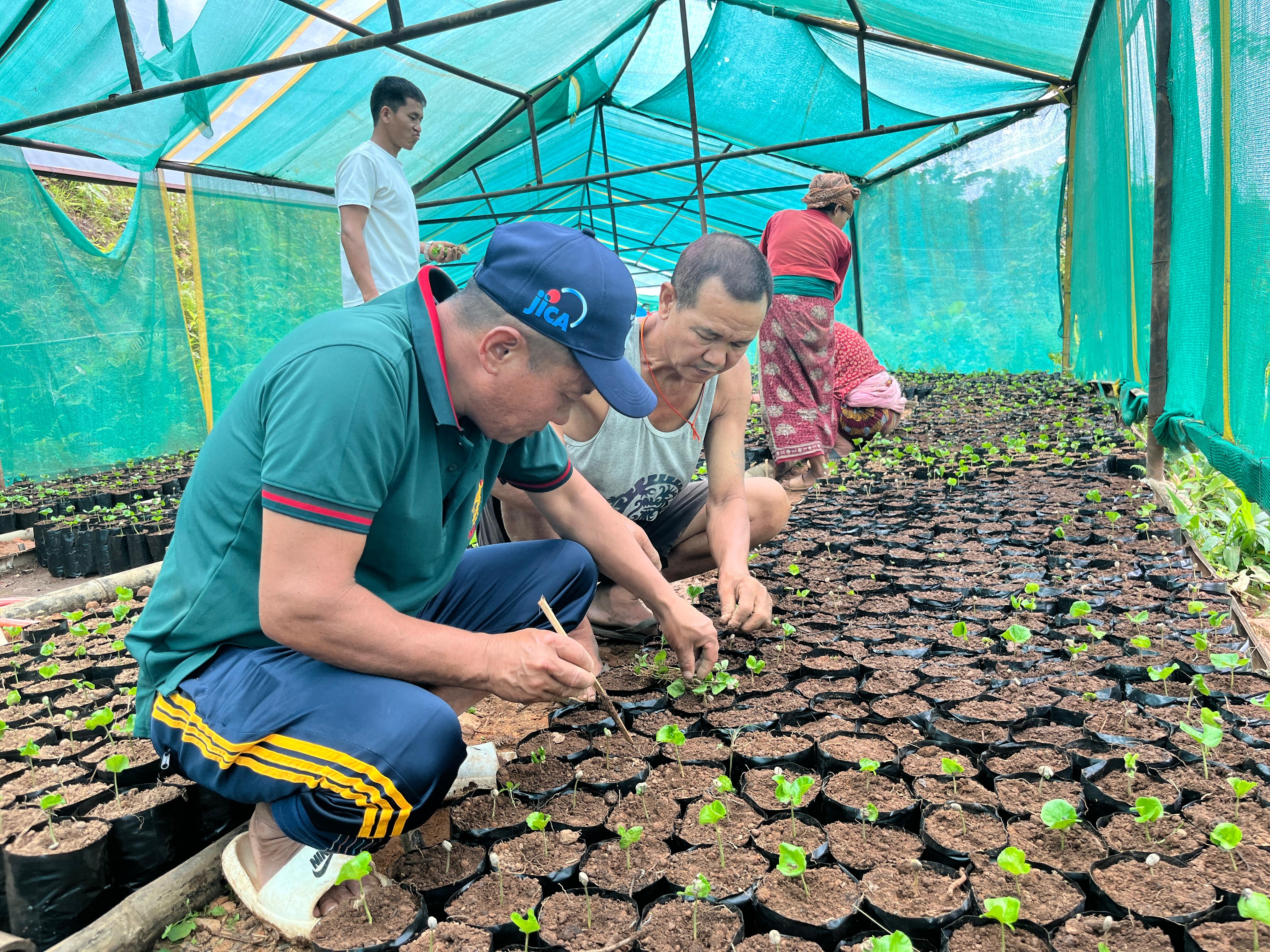
The PESHA Project adopts a modular training approach, guiding farmers through sequential learning stages. Beginning with training on nursery establishment and seedbed preparation, the farmers progressed to the next module. On June 18, a practical training session was conducted on the Transplantation of Coffee Cotyledons in Polybags and Its Management, further enhancing their skills in coffee nursery development.
A practical training was conducted on June 18, 2025, at the Central Nursery, Kuwapani (Gandaki RM-2) to enhance farmers' skills in transplanting coffee cotyledons into polybags and improving nursery management. Two participants from Gandaki RM and Sahid Lakhan RM took part.
Objectives:
- To build farmers’ capacity in transplanting coffee cotyledons.
- To promote effective nursery practices for higher seedling survival and growth.
Key Activities:
- Orientation on nursery management.
- Demonstration and hands-on practice on cotyledon transplantation, soil preparation, spacing, watering, and shade management.
- Discussion on common mistakes and how to reduce seedling mortality.
Outcomes:
- Farmers successfully practiced cotyledon transplantation.
- Improved understanding of nursery techniques.
- Participants committed to applying the learned practices in their nurseries.
Follow-up Plan:
- Regular monitoring by technical officers.
- Refresher trainings and exposure visits in upcoming nursery phases.
Conclusion:
The training effectively built farmers' practical knowledge in a critical stage of coffee nursery development. It is expected to enhance the quality of seedlings and contribute to the long-term success of coffee farming in the area.
|
PA Code: |
J-P3.4 |
|
Activity Name |
Facilitate ELFs to develop a more effective production and sales mechanism a. Facilitate the collective sales of production (Coffee) through supporting communication with traders and providing financial assistance for shipping products |
In the fiscal year 2081/82, Sahid Lakhan Rural Municipality implemented a production-based subsidy program to support parchment coffee producers. As per the scheme, farmers were eligible to receive a subsidy of NPR 15 per kilogram of verified parchment coffee.
To access this support, farmers were required to submit land ownership and citizenship documents. However, due to the common practice of registering land in the name of the family head, many eligible farmers faced difficulties in submitting the required documents under their own names.
To address this challenge, a facilitation mechanism was introduced whereby Experienced Leader Farmers (ELFs) and neighboring farmers supported the submission of claims on behalf of 81 farmers. Through this process, 44 farmers from clusters including Tinghare, Khagi, Tinmane, Pipalchhap, Bakrang, and surrounding areas successfully participated in the program through registered Cooperatives (Saraswati Coffee Producers Cooperatives).
A total of 579.947 kilograms of parchment coffee was verified, resulting in a total subsidy amount of NPR 8,699.21 to be disbursed to the participating farmers. In addition, NPR 2 per kilogram (amounting to NPR 1,159) was allocated to the cooperatives to support management efforts. This initiative reflects the rural municipality’s ongoing commitment to promoting sustainable coffee farming, strengthening farmer institutions, and enhancing rural livelihoods through targeted agricultural subsidies.
This year, Sahid Lakhan Rural Municipality successfully implemented a production-based subsidy program to support local farmers. Building on this experience, efforts are underway to introduce a similar policy in Gandaki Rural Municipality in the coming year. This initiative aims to expand support to more farmers, promote sustainable coffee cultivation, and further strengthen agricultural development within Gandaki RM.Summary of Cluster wise farmers applied for subsidy program in Sahid Lakhan RM
|
Cluster |
No. of Farmers |
Parchment (KG) |
Subsidy Amount (NPR) |
|
Tinghare |
7 |
114.410 |
1716 |
|
Khagi |
8 |
101.357 |
1520 |
|
Tinmane |
3 |
102.600 |
1539 |
|
Jamiswara |
1 |
42.600 |
639 |
|
Cheresthok |
2 |
39.000 |
585 |
|
Dadagaung |
1 |
20.760 |
311 |
|
Ranjile |
1 |
4.680 |
70 |
|
Pipalchhap |
11 |
55.430 |
831 |
|
Bakrang |
10 |
99.110 |
1486 |
|
Total |
44 |
579.947 |
8699 |
|
PA Code: |
J-P5.5 |
|
Activity Name |
RM level stakeholders meeting |
|
Stakeholder |
Coordination Date & Duration |
Purpose of Coordination |
Achieved Outputs/Units |
Stakeholder Contribution to Project |
|
Sashid Lakhan RM |
June 10, 2025 |
Pre-budget Planning for FY 2082/83 |
As part of the pre-budget planning process, a joint consultation was held with government and non-government stakeholders to share and discuss plans for the upcoming fiscal year. This initiative aimed to ensure transparency, align priorities, and foster collaboration for effective implementation. |
Stakeholders endorsed the proposed plans and policies, recommending their inclusion in the upcoming budget program for effective implementation. |
|
Tanglichowk Secondary School |
June 10, 2025 |
To expolore opportunities for engaging technical students OJT interns, ensuring practical learning. |
Discussions were held on potential opportunities and suitable platforms for engaging technical students, with a focus on enhancing their practical skills through field exposure and project-based learning. |
The schools have expressed their willingness to collaborate for technical students for potential internship and field-based learning opportunities. |
|
Sahid Lakhan Ward-1, Ward -6 |
June 30 |
For recommendation letter for farmers for Production based Subsidy |
Recommended letter was provided that makes the farmers to apply for subsidy program |
Ward office make the process easy by providing the recommendation letter. |
|
PA Code: |
J-P5.4 |
|
Activity Name |
Project team meeting |
The board Committee meeting was conducted on 15th of June, 2025. The major agenda and decisions on the meeting were:
Meeting Summary — Maya Prem Memorial Trust (MPMT) Executive Committee
Attendees: Chairperson, Vice-Chairperson, Secretary, Treasurer, Members, and Field Manager Mr. Nitesh Ghimire
Key Agendas Discussed and Decisions Made:
- Focal Person for PESHA Project:
- Khun Prasad Regmi, the existing focal person, was appreciated for his work and unanimously reappointed for the second year (1 April 2025 – 31 March 2026).
- Service benefits as per the Project Partnership Agreement will be provided.
- Project Management Committee (PMC) Formation:
- The PMC was restructured for the second year following the Project Management Guidelines.
- PMC consists of 7 members: 2 from AMDA-MINDS Nepal and 5 from MPMT, including the focal person and field manager.
- All previous subcommittees (except procurement) of the first year were dissolved, with full authority handed over to PMC.
- Staff Evaluation and Field Monitoring:
- The previous staff evaluation committee was dissolved.
- Responsibility for staff evaluation and field monitoring fully transferred to PMC.
- A staff evaluation guideline will be developed and approved by PMC by June 2025.
- Human Resource Management:
- Due to project expansion and increased farmer numbers, at least 2 additional staff will be recruited on short contracts (interns, OJT, volunteers) to support field monitoring, data collection, coordination, and reporting.
- Recruitment will be managed by PMC in coordination with field managers and project managers.
- Bank Signatory Change:
- Signature authority on the Prime Bank account will be transferred from Administrative & Accounts Officer Mr. Pushparaj Joshi to Field Manager Mr. Nitesh Ghimire.
- Procedures for signature removal and replacement on resignation were clearly defined, with responsibilities assigned to MPMT office head, field manager, or admin/finance branch.
- Coffee Seedling Plantation by Project Staff:
- To develop coffee growing areas as model zones, project staff and MPMT officials will actively plant coffee seedlings personally.
- A detailed list of members and seedling quantities was agreed upon.
- Family members of social mobilizers already benefiting directly from the project are not eligible for double benefits.
- Substitution Leave Policy:
- Social mobilizers cannot claim substitution leave if they work on official Saturdays or other days assigned by the organization.
- Prior written approval from the line manager is mandatory for working on Saturdays.
The Staff meeting; MPMT was conducted on 27th of June, 2025. The major agenda on the meeting were:
- Provide the complete details of coffee seedling distribution (as per the given format).
- Settle 30% partner contribution of the coffee seedling distribution.
- Collect detailed demand for shade tree seedlings (as per the given format).
- Regarding the selection of additional lead farmers.
- Regarding cleaning and record management of pulping center materials.
- Regarding management of coffee nursery established in Srijansheel Coffee Cooperative.
- Regarding social audit.
- Report the previous month’s weekly plan versus achievement.
Recent News and Events
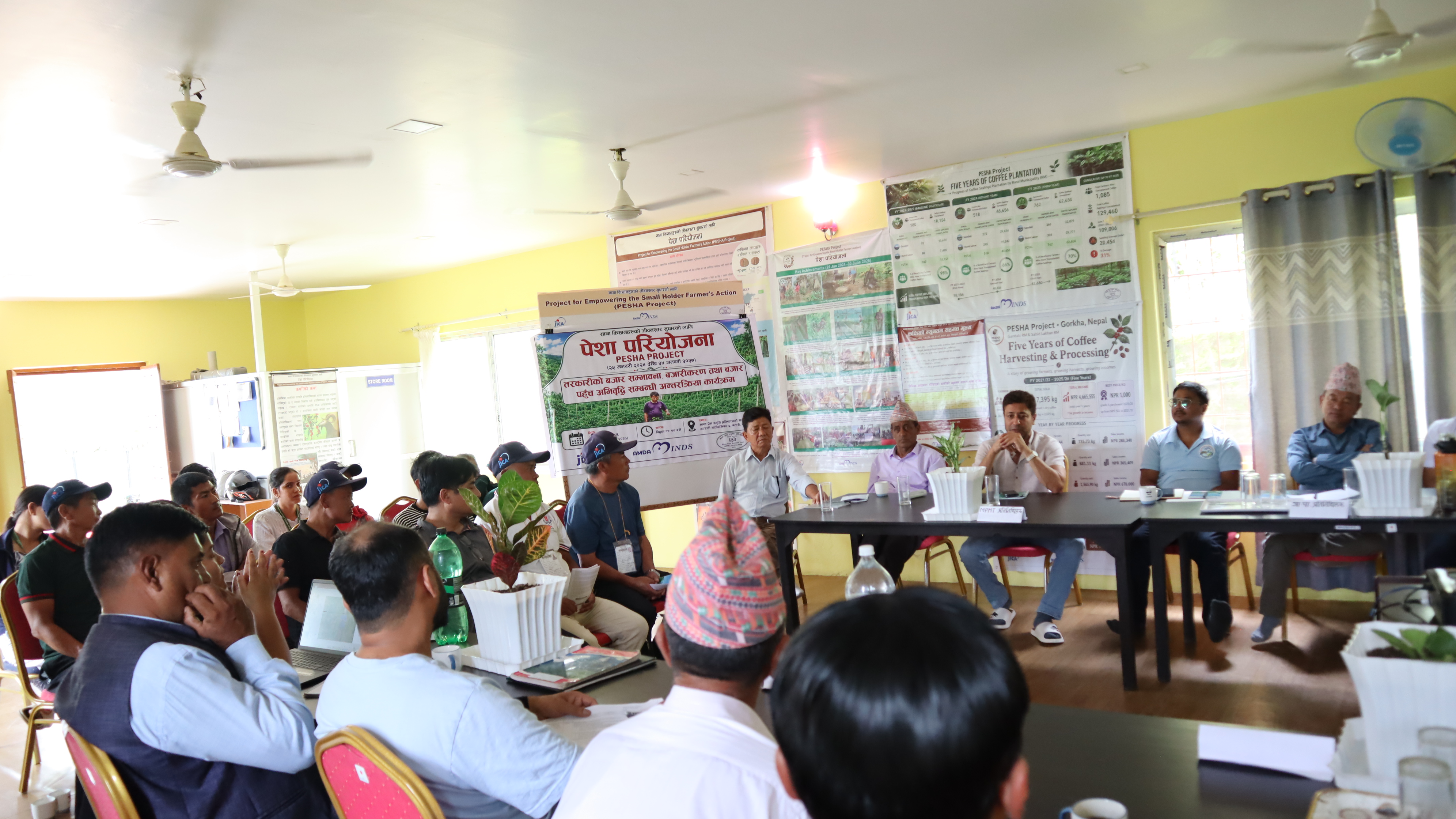
Market Linkages in Action: Enhancing Vegetable Market Potential, Marketing, and Market Access
2026-08-04
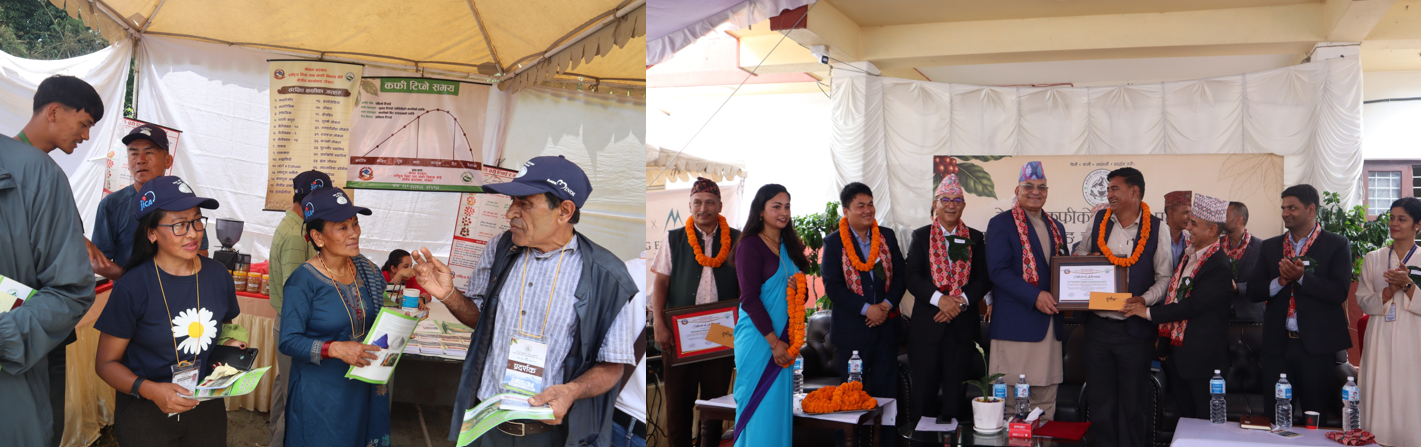
“Gorkha's Coffee Triumphs on the National Stage: Secures 3rd Place at the National Coffee Cupping Championship”
2026-07-08
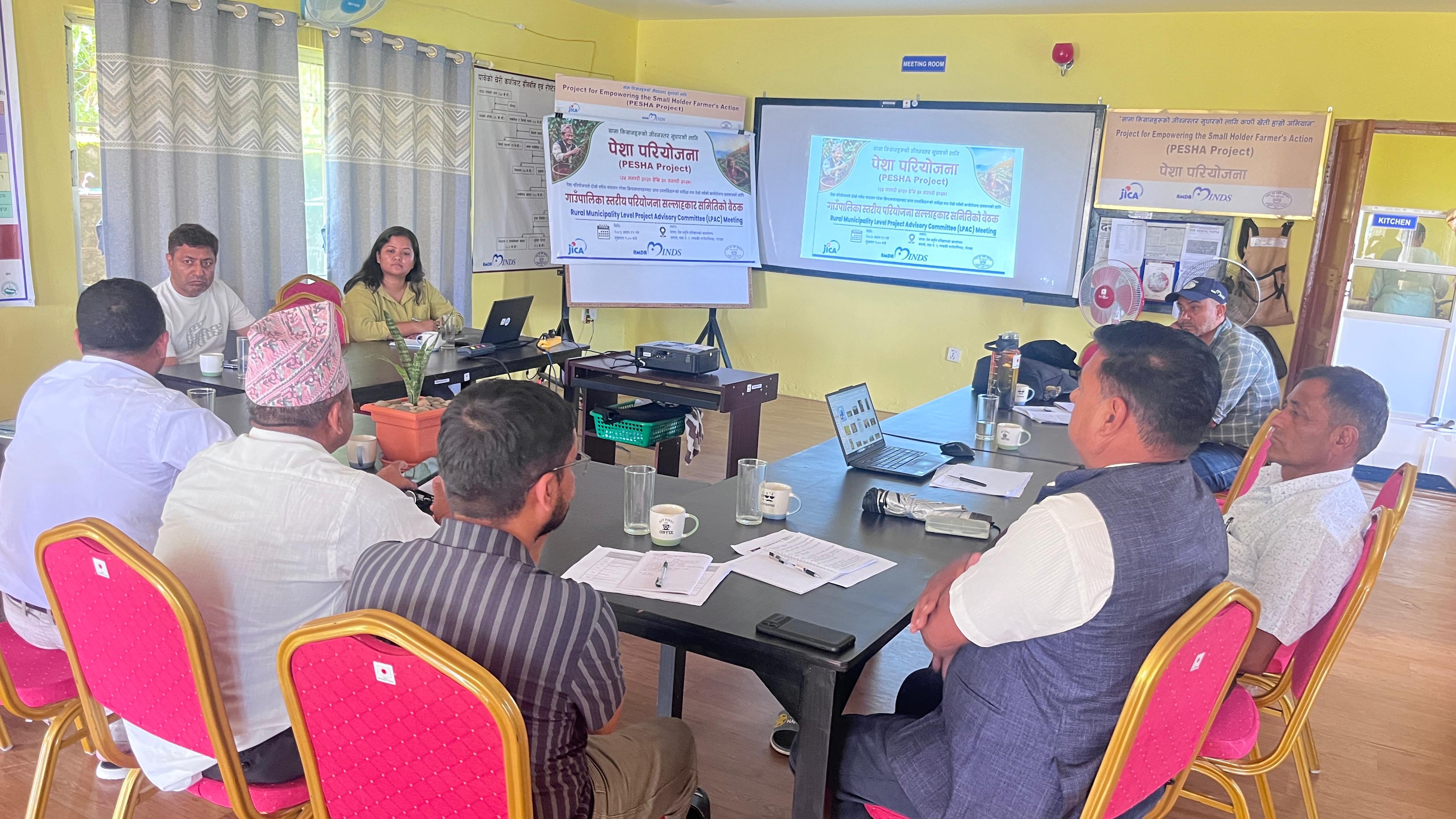
“Local Level Project Advisory Committee (LPAC) Meeting: Advancing Sustainable Agriculture and Local Partnerships”
2026-07-07
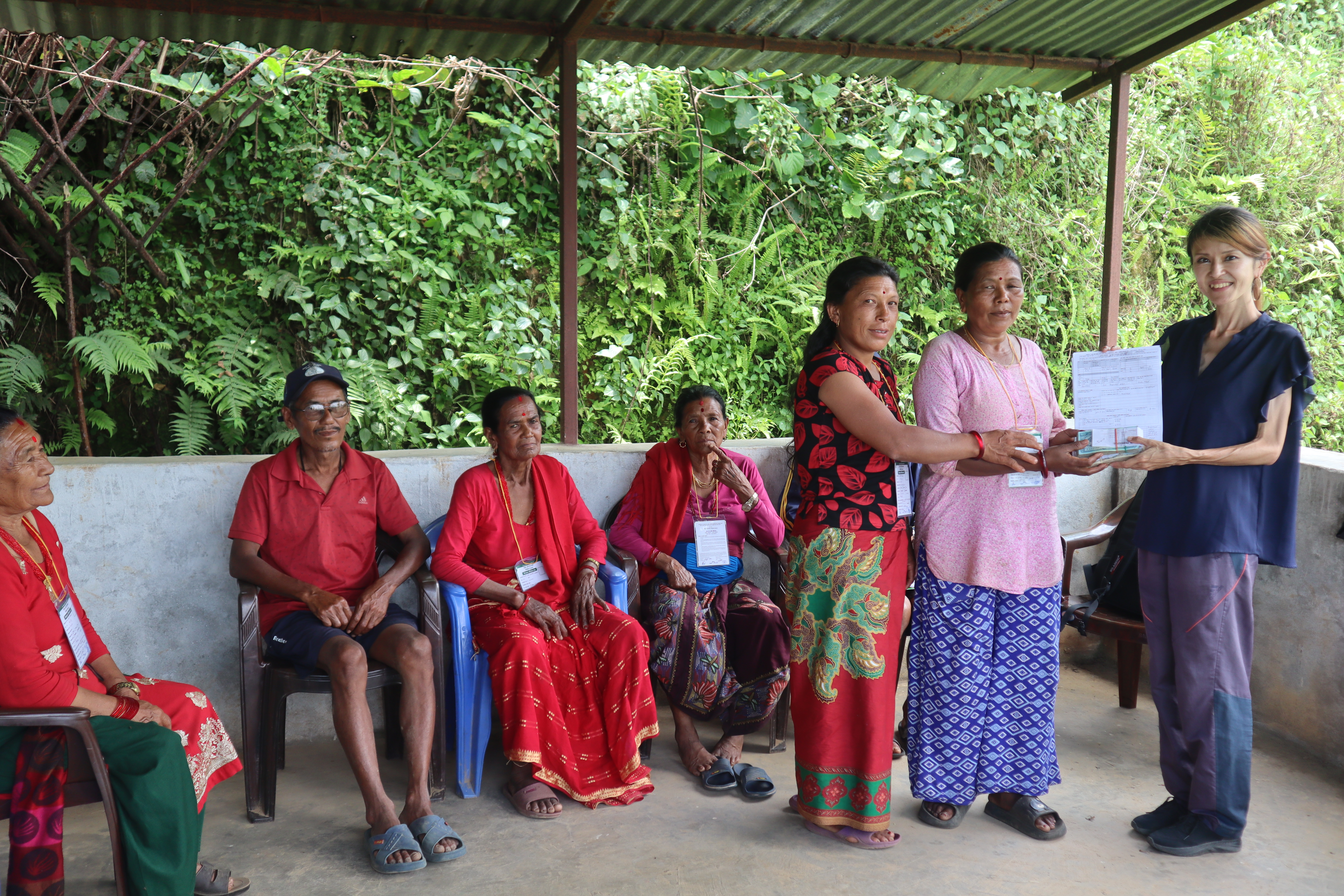
“Empowering Farmers Through Fair Coffee Trade: Collective Marketing, Transparent Payouts, Stronger Communities”
2026-06-28